As the academic year begins, many engineering students will move beyond individual assignments and begin working on projects where several disciplines, tools and people contribute to the same result.
Formula Student teams, robotics projects, aerospace programmes, capstone projects and engineering competitions already reproduce an important characteristic of professional engineering work: one technical decision can affect several disciplines at once.
1. When the Project Becomes a Team Problem
Consider a student team developing a robotic system.
Mechanical engineering defines the structure. Electronics determines component placement and power requirements. Software and controls introduce sensors and actuators. Manufacturing constrains what can actually be produced.
Each discipline can perform its own work effectively and still create a coordination problem for the team.
A change to the battery may affect the enclosure; the enclosure may affect the chassis; the chassis change may invalidate a manufacturing drawing.
At that point, the challenge is no longer simply sharing the latest files. How does the team understand what changed, why it changed, and what else that decision affects?
2. How the Team Could Use Scopture
In Scopture, the team can bring the project brief, requirements, responsibilities, CAD models, drawings and technical documents into one connected project.
Students can continue using the engineering software appropriate to each discipline, where Scopture becomes the layer where that work is brought together and coordinated.
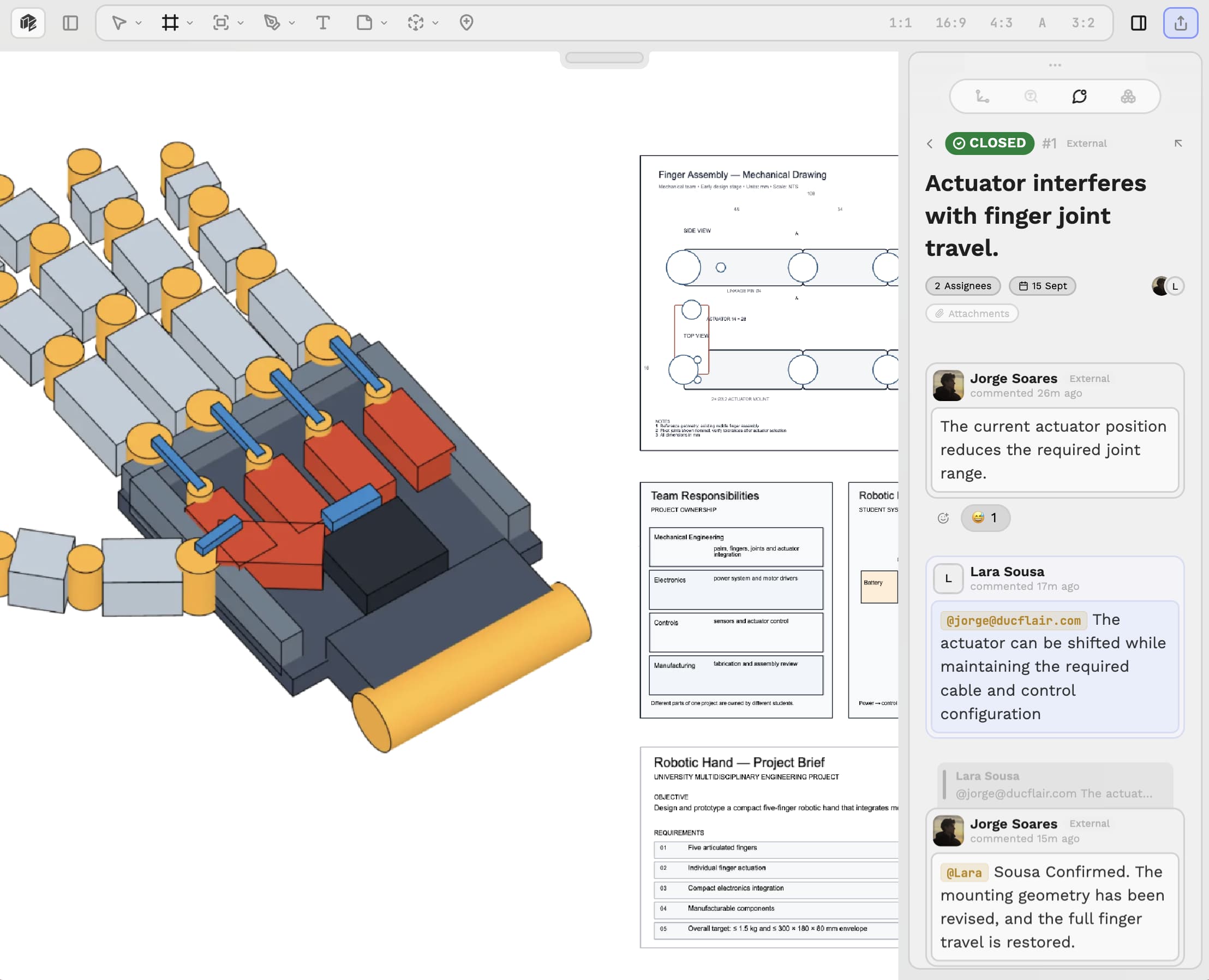
As shown in Figure 1, our hypothetical robotic-hand project brings the mechanical model together with the project brief, team responsibilities, engineering drawings and controls documentation. A coordination issue is attached directly to the affected part of the model, allowing the discussion and subsequent resolution to remain connected to the work that triggered it.
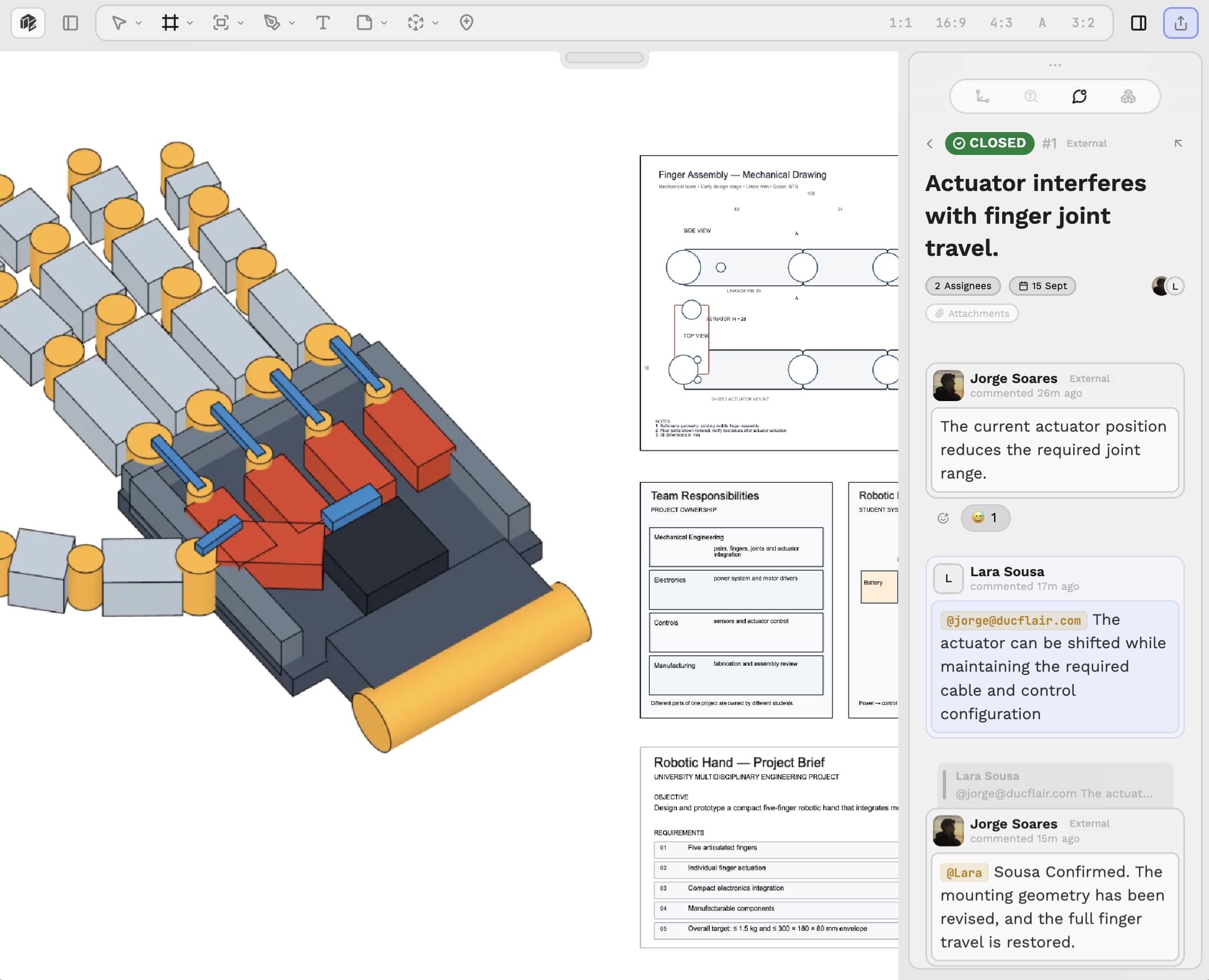
Figure 1 — Hypothetical student robotics project in Scopture, combining multidisciplinary project artifacts with a coordination issue attached directly to the affected 3D model.
When a question emerges, it can therefore be raised directly against the relevant artifact. The discussion, decision and resulting revision remain connected to the work they affected.
3. Conclusion
Students do not need to wait until their first engineering job to experience multidisciplinary coordination. The next Formula Student project, robotics competition, capstone project or hackathon is already an opportunity to work this way.
For your next team engineering project, try keeping not only the files together, but also the decisions that explain how the project evolved. Or building something with a multidisciplinary student team this semester? Try running the project in Scopture and tell us where the workflow breaks.
That is the experiment we would like students to try with Scopture.